

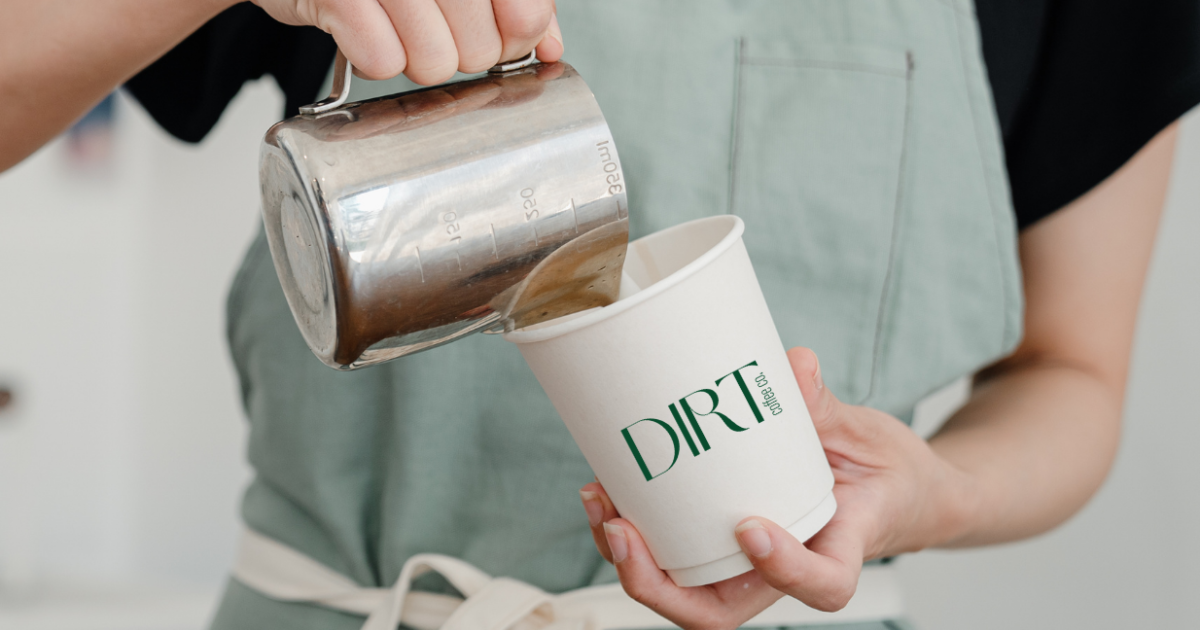
DMH Brands is taking a different approach to coffee franchising by prioritising lower investment costs and stronger franchisee returns as it prepares to grow Dirt Coffee Franchise into a network of more than 100 locations.
Rather than competing for premium high street sites with expensive rents, the coffee brand is focusing on smaller-format stores, unconventional locations and reduced operating costs, allowing franchisees to enter the market with significantly lower levels of investment in the dirt coffee franchise.
A franchise model designed around profitability
The Benefits of the Dirt Coffee Franchise Model
This innovative approach positions the dirt coffee franchise as a unique opportunity in the coffee industry.
David Hodgetts, CEO and founder of DMH Brands, believes too many quick-service restaurant (QSR) franchise systems place greater emphasis on building brand visibility than ensuring franchisees achieve sustainable profits.
According to Hodgetts, premium locations often come with substantial rental commitments, while rising wage bills, increasing food and beverage costs, and higher operating expenses continue to squeeze margins across the hospitality sector. These factors can significantly extend the time it takes for franchisees to recover their initial investment.
He believes many first-time franchisees underestimate the true financial commitment required when joining a franchise network.
“I don’t think it’s made clear enough for franchisees that it will take them a long time to get the return on their investment,” he said.
Lower rents, smaller stores and reduced investment
To address these challenges, Dirt Coffee has developed a franchise model centred on lower occupancy costs and flexible trading formats.
Instead of targeting expensive high streets and shopping centres, the brand is identifying locations where rents are considerably lower while still offering strong customer demand.
Hodgetts revealed that one recently opened Dirt Coffee outlet operates from premises with an annual rent of approximately £14,000, a fraction of the costs associated with many traditional coffee shop locations. By comparison, he suggested a comparable site in Wimbledon for a major coffee chain could command annual rent exceeding £100,000.
The business believes this approach dramatically reduces the financial risk for franchisees while improving the potential return on investment.
Innovative store formats support expansion
As part of its expansion strategy, DMH Brands is also experimenting with highly compact retail concepts.
One of the company’s next openings will see Dirt Coffee operating from a converted telephone box near London’s St Pancras Station, creating a micro-format coffee outlet that can be operated by a single employee while keeping staffing and property costs to a minimum.
The business is also exploring opportunities in residential developments and other non-traditional trading locations where competition is lower and occupancy costs remain attractive.
These flexible formats could allow the brand to establish a presence in locations that would be commercially unviable for larger coffee shop operators.
Franchisee success remains the priority
Although Dirt Coffee has ambitious plans to exceed 100 locations across the UK, DMH Brands says expansion will not come at the expense of franchisee profitability.
Hodgetts stressed that each new location will be assessed on its financial viability rather than simply increasing the size of the network.
“So it’s franchisee first, and then the brand comes second, rather than the other way round.”
The company also confirmed it is exploring international growth opportunities alongside its UK expansion, suggesting its lower-cost operating model could be replicated in overseas markets.
A changing approach to coffee franchising
As operating costs continue to challenge the UK’s hospitality industry, franchise models that require lower capital investment and deliver faster potential returns are becoming increasingly attractive to prospective business owners.
By combining smaller retail footprints, lower rental commitments and innovative trading locations, Dirt Coffee is positioning itself as an alternative to traditional coffee franchise models, with franchisee profitability placed firmly at the centre of its long-term growth strategy.
Keep updated with the latest Franchise Industry News and Subscribe to ‘INBOX EDITION” Know more. Grow more.

