

Introduction to Historic Spaces and Children’s Development
Young children are naturally curious and perceptive, often noticing details in their environment that adults might overlook. Heritage buildings, with their unique architectural features and historical significance, can provide a rich and stimulating environment for children to explore and learn. According to experts in child development, exposure to historic spaces can have a profound impact on a child’s cognitive, social, and emotional growth (Source: National Trust). The sensory experiences and imaginative play opportunities offered by these spaces can foster a sense of wonder, creativity, and respect for the past.
The Impact of Historic Spaces on Children’s Imagination and Learning
Historic buildings, with their distinctive features and character, can become a catalyst for children’s imagination and creativity. The tall ceilings, original fireplaces, and unique spaces can inspire stories, games, and role-playing, helping children develop their problem-solving skills and emotional intelligence. Moreover, the gentle exposure to history and cultural heritage can help children form a sense of connection to their community and the world around them. As noted by educational experts, “children who are exposed to historic spaces tend to develop a deeper understanding of the past and its relevance to their present and future” (Source: Historic England).
Real-Life Examples of Historic Spaces in Nurseries
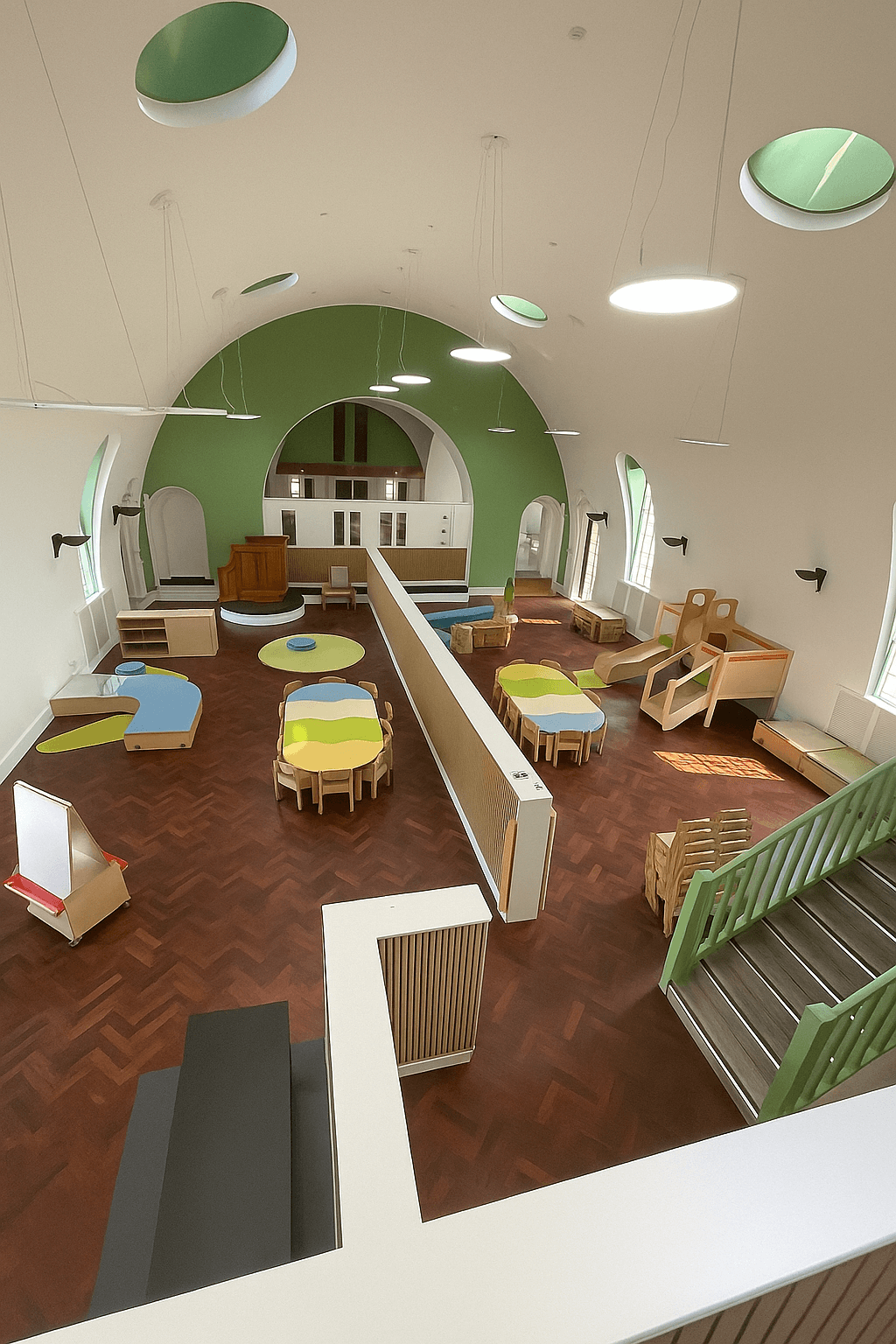
In Canopy Potters Bar, a nursery is situated inside the Grade II listed Green Man public house, where original fireplaces have been repurposed as cozy reading corners and play areas. Similarly, in Wickford, the transformation of St Luke’s Chapel into a nursery is underway, with the original lectern and chapel organ being incorporated into the design. These examples demonstrate how historic spaces can be adapted to create unique and engaging environments for young children, promoting learning, exploration, and imagination.
The Benefits and Challenges of Using Historic Buildings as Nurseries
While adapting historic buildings for use as nurseries can be a complex and costly process, the benefits for children’s development and well-being are well worth the effort. As noted by childcare experts, “historic buildings offer a unique opportunity for children to connect with their heritage and develop a sense of belonging and identity” (Source: BBC). However, the process of renovating and adapting these buildings can be challenging, with planning restrictions, higher renovation costs, and the need to preserve original features. Despite these challenges, many organizations, like Canopy Nurseries, choose to invest in historic buildings, recognizing the long-term benefits for children and the community.
Conclusion and Recommendations
In conclusion, historic spaces have the power to inspire, educate, and nurture young children, providing a unique and enriching environment for growth and development. By incorporating historic buildings into nursery design, educators and caregivers can create a sense of place, story, and belonging that can last a lifetime. For more information on the benefits of historic spaces for children’s development, visit Here.

