

Unlocking the Power of Scooting for Preschoolers: A Key to Developing Motor Skills and Coordination
School may seem like a distant milestone for some, but investing time in encouraging infants to develop through movement in their early years is crucial for achieving those all-important developmental milestones. Regular scooting can help children become more alert, motivated, and focused by the time they reach school age. According to experts, scooting plays a significant role in enhancing gross motor skills, which are essential for movement and overall physical development.
Gross motor skills, which enable us to move our bodies, can be significantly improved through scooting. This activity helps build and strengthen muscles, securing and embedding these essential skills in several ways:
- Balance: Maintaining stability while moving on a scooter enhances overall balance and coordination.
- Coordination: Using both legs to push off while steering simultaneously promotes hand-eye coordination and overall physical harmony.
- Strength: Pushing off with one foot while maintaining posture builds leg strength and core stability, essential for overall physical development.
- Fine motor skills: Steering the scooter enhances fine motor control and dexterity, crucial for everyday activities.
- Spacial awareness: Navigating around obstacles while scooting helps children develop a better understanding of their bodies in relation to their environment.
Cognitive Benefits of Scooting
In addition to physical benefits, scooting also has a significant impact on cognitive skills, including:
- Problem-solving: Navigating the environment, including finding the safest path and assessing obstacles, is an essential problem-solving skill.
- Concentration: Scooting requires focus and attention to navigate successfully, enhancing overall concentration and mental clarity.
- Memory: Remembering routes and where to go improves memory and cognitive function.
- Planning: Speeding up, slowing down, or changing direction requires planning and thinking ahead, essential skills for everyday life.
- Social interactions: Scooting with friends strengthens social bonds and creates positive experiences, further enhancing cognitive development.
- Task sequencing: Regular practice of patterns, such as pushing off, steering, and stopping, improves the ability to remember steps in a task.
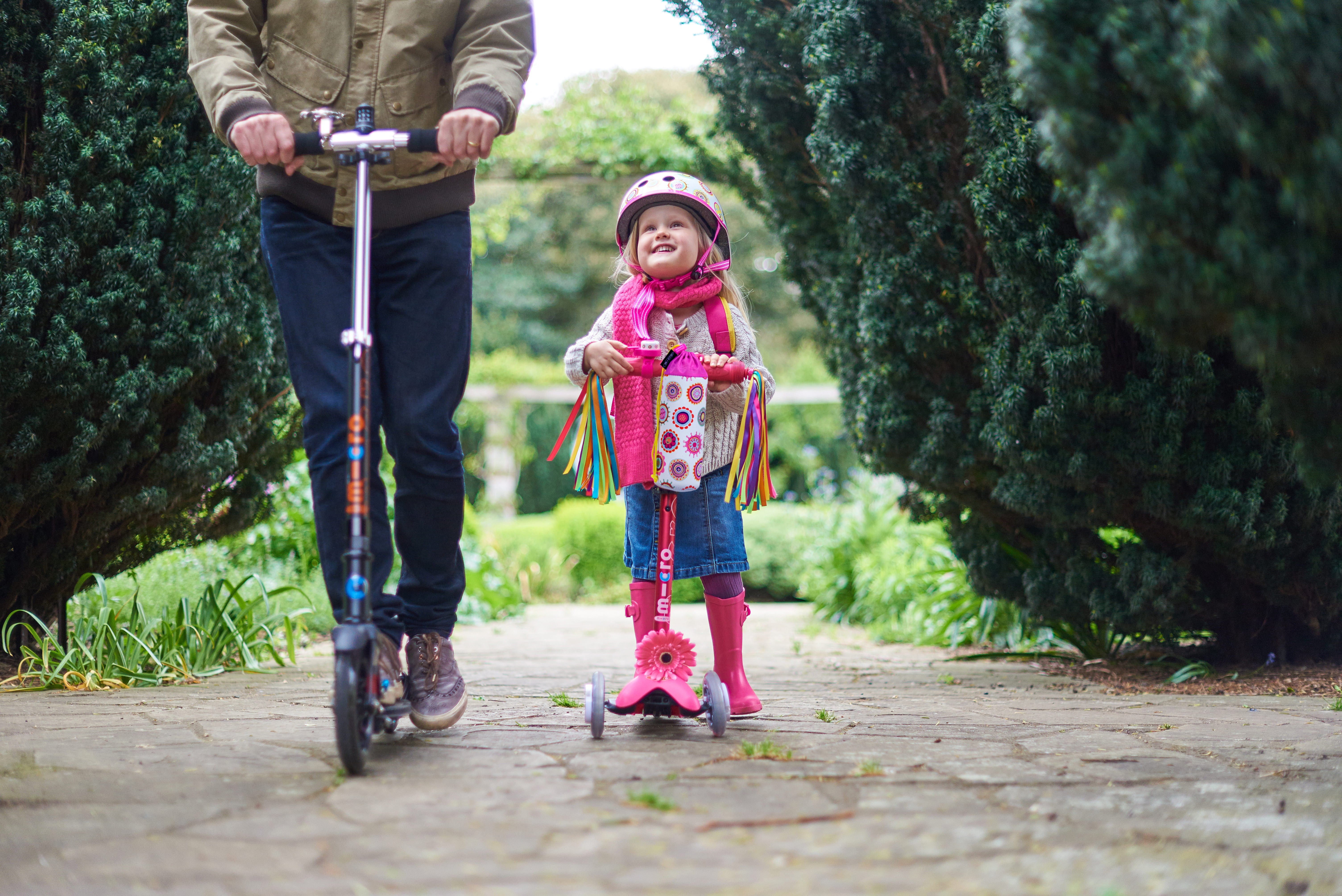
A study conducted by Brytesparks in 2019, in collaboration with Micro Scooters, verified that riding a Micro scooter helps children gain confidence in their physical abilities. As a result, they are able to move with a better understanding of their bodies, capabilities, and limitations, making them less likely to take unnecessary risks.
Developmental Milestones and Scooting
Developmental milestones include all the things a child does for the first time, such as taking their first steps. While all children develop at their own pace, many infants are ready to scoot by the age of 12 months. Offering children a broad range of movement opportunities, such as scooting, is essential during this period. Providing a goal while they are moving, such as a stable means of movement like a Micro scooter with a seat, helps them feel safe and encourages exploration.
Products Supporting Development
The experts at Brytesparks have assessed child development with Micro Scooters in mind, specifically their ride-on toddler scooter and balance bikes.

For more information on how scooting can benefit your child’s development, visit Here

