

Introduction to Gasoline Particulate Filters (GPFs)
Gasoline Particulate Filters (GPFs), also known as Otto Particulate Filters (OPF) or Petrol Particulate Filters (PPF), are essential components in modern petrol engines. They capture fine particulates and soot before they can escape through the exhaust system, playing a vital role in reducing emissions and meeting EU6 and China 6 emissions standards. GPFs are designed to work in conjunction with the Engine Control Unit (ECU), which monitors system conditions, triggers regeneration, and adjusts ignition timing and air/fuel ratio to ensure optimal performance.
How GPFs Work
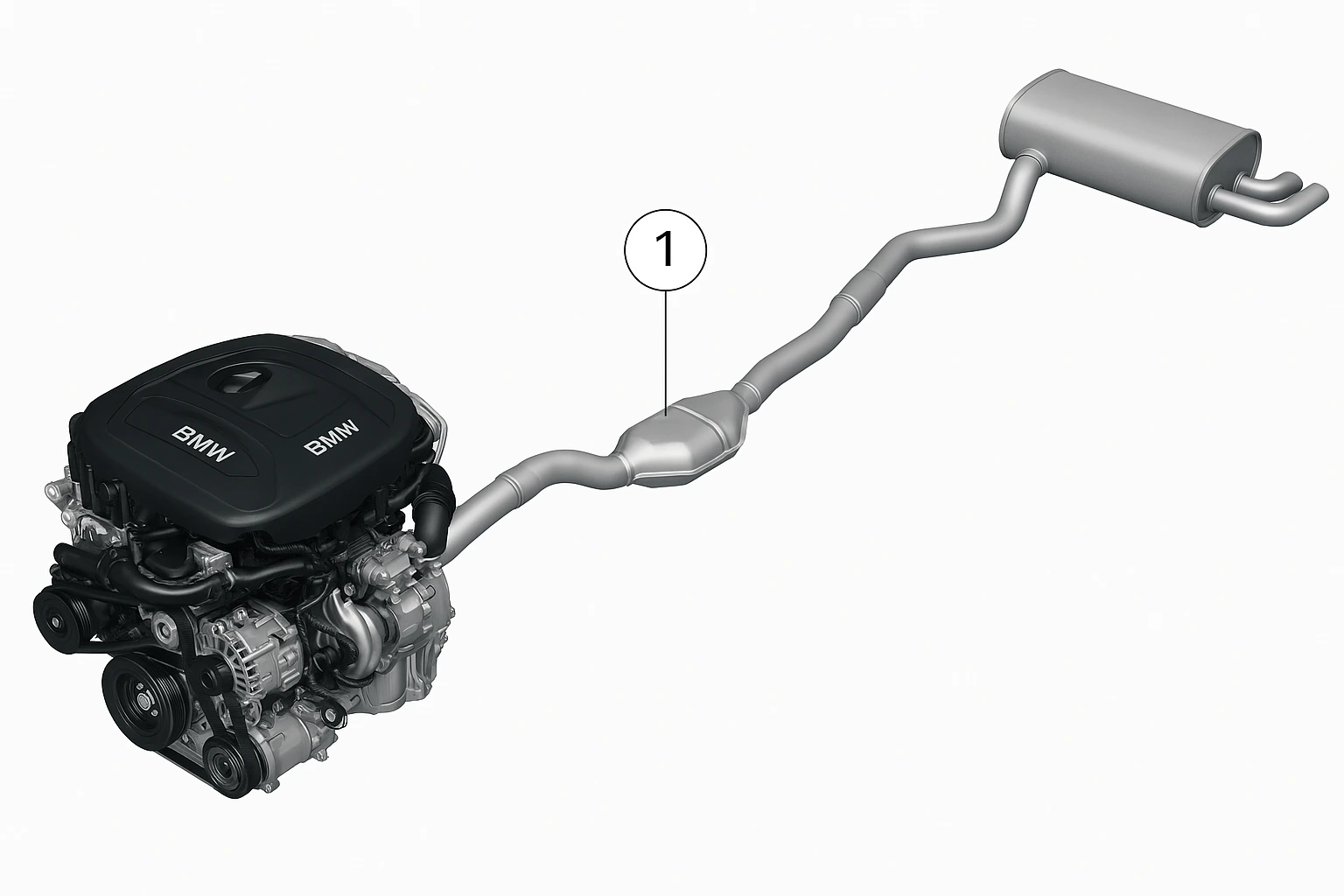
The GPF system consists of a ceramic substrate that traps soot and particulates from the exhaust gases. Regeneration occurs when the ECU detects soot buildup and increases the exhaust temperature via air/fuel and ignition adjustments, oxidizing the soot into ash. This process typically occurs during deceleration fuel cut-off events when oxygen enters the exhaust stream and temperatures exceed ~600°C. Unlike diesel systems, gasoline engines produce lower soot loads, so regeneration occurs less frequently.
BMW B38A15 engine, exhaust system including Gasoline Particulate Filter (GPF)
Common Issues with GPFs
Despite their robust design, GPFs can fail due to various factors, including frequent short trips, faulty sensors, incomplete regeneration, high backpressure, or contamination. Warning signs of GPF failure include warning lights, limp mode, reduced performance, or Diagnostic Trouble Codes (DTCs) such as P2452 and P2002. Technicians can use Guided Component Tests, DC voltage/signature tests on sensors, or a Mityvac to measure pressure across the GPF to diagnose issues.
Diagnosing and Regenerating GPFs
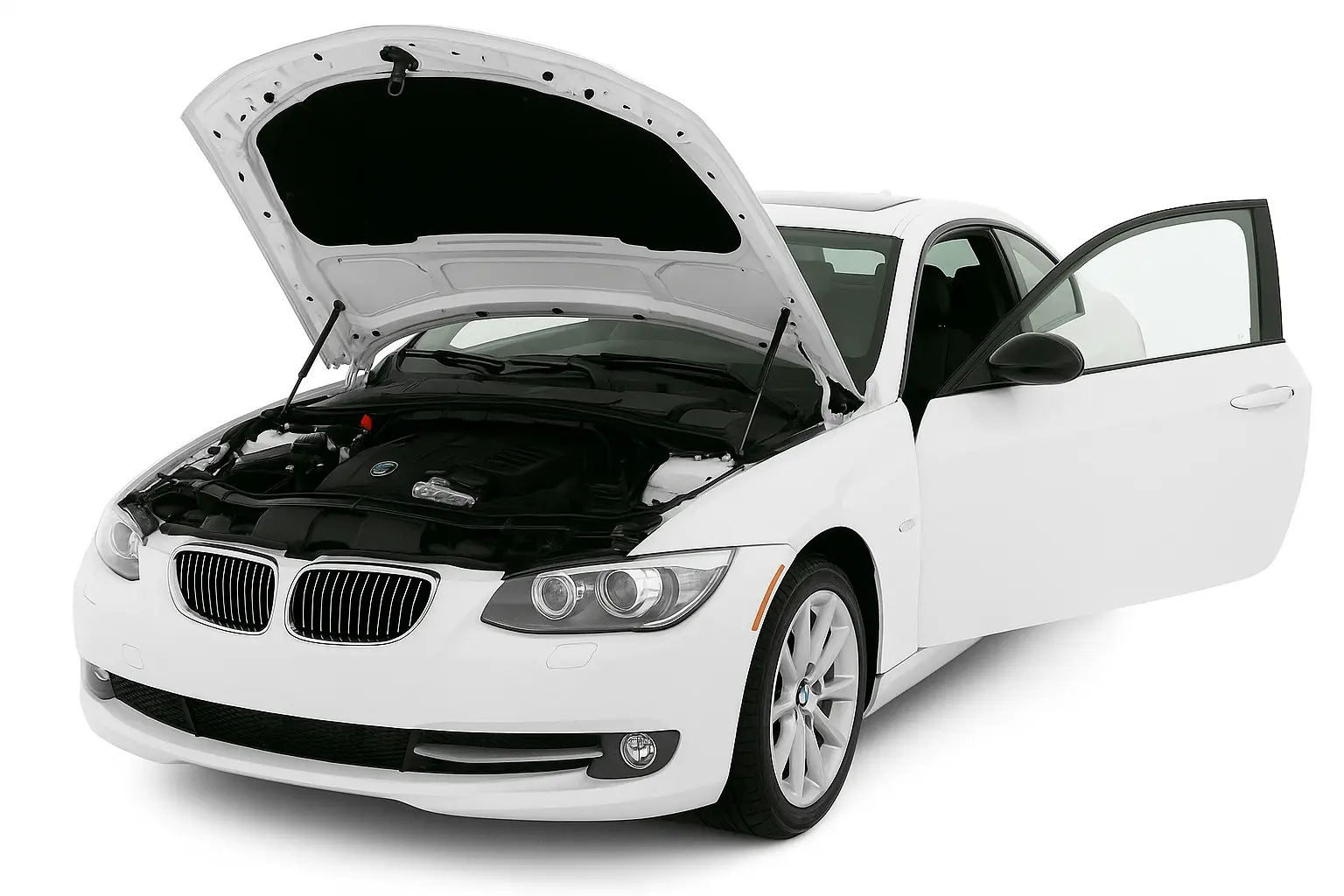
A real-world example of diagnosing and regenerating a GPF can be seen in the case of a 2020 BMW 1-Series (F40) 1.5L Petrol Engine – B38A15. If the vehicle exhibits warning lights, reduced power, or limp mode, and DTCs such as P2452 – PPF Differential Pressure Circuit/Open are logged, further investigation is required. The technician can use the Snap-on Diagnostic Software to guide them through the diagnostic process, offering real-world insights to quickly get to the root cause of the problem.
Step-by-Step Guide to GPF Regeneration
The regeneration process involves several steps, including:
-
Completion – Once ~600°C is reached, soot oxidises, leaving a small amount of ash for the filter’s lifespan.
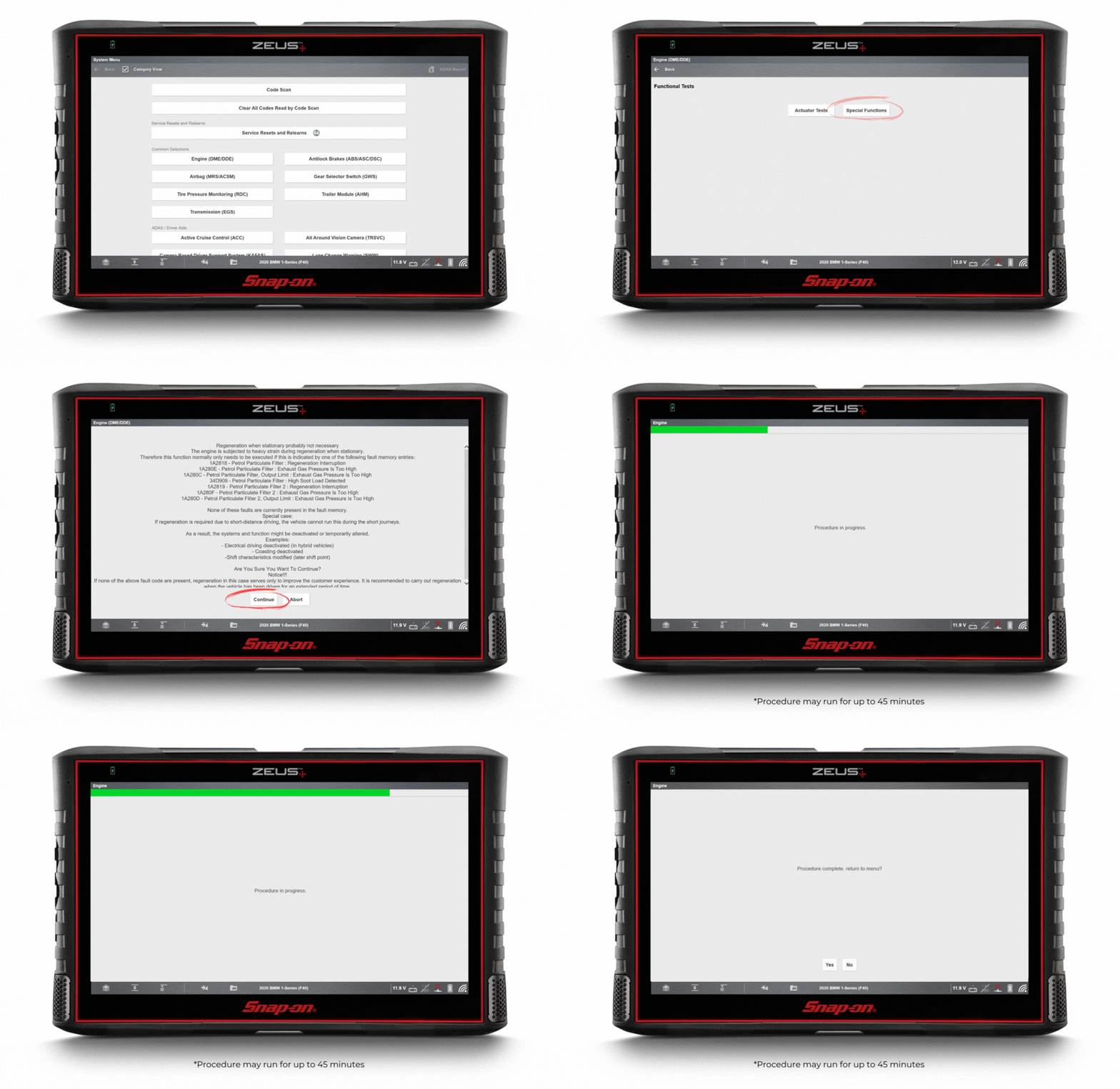
Petrol Particulate Filter Regeneration
Maintaining GPF Systems
Understanding and maintaining GPF systems is crucial for efficient repairs. The Snap-on Diagnostic Software provides Guided Component Tests, Troubleshooter Tips, and functional test coverage to help technicians manage GPF regeneration, diagnose accurately, and deliver confident, lasting repairs. By following the recommended procedures and using the right diagnostic tools, technicians can ensure the GPF system operates correctly, reducing emissions and improving overall vehicle performance.
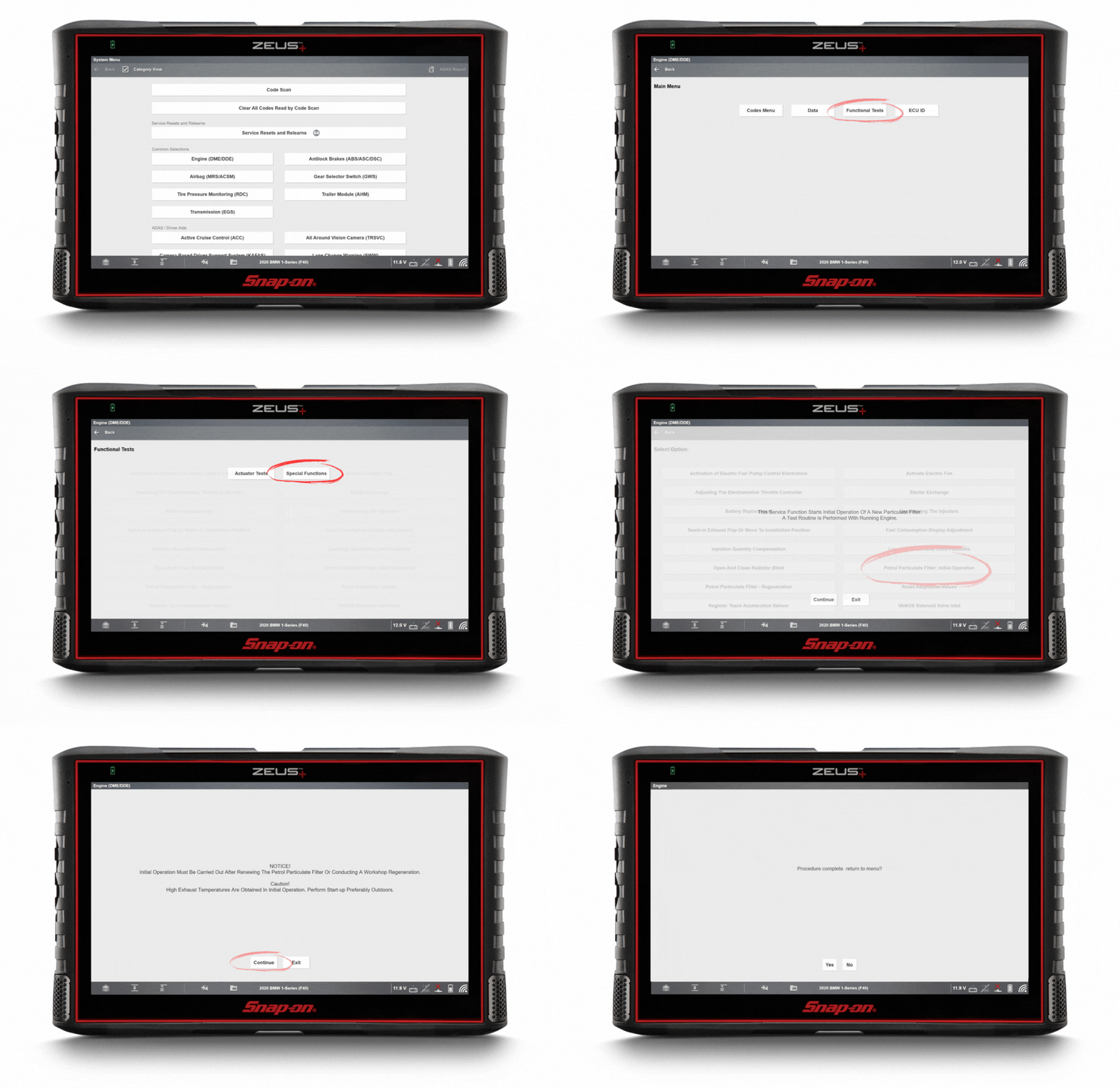
Petrol Particulate Filter: Initial Operation
Frequently Asked Questions
What is a GPF? A Gasoline Particulate Filter (GPF), also called OPF or PPF, traps fine soot and particulates from petrol engines to meet emissions standards.
When were GPFs introduced? First fitted around 2014 (Mercedes S500); standard on most petrol engines from 2018 onwards.
How does a GPF work? Exhaust passes through a ceramic substrate that traps soot. Regeneration heats the filter to ~600°C, oxidising soot into ash.
What triggers regeneration? Pressure sensors detect soot buildup; the ECU increases exhaust temperature via air/fuel and ignition adjustments.
What are common issues? Frequent short trips, faulty sensors, incomplete regeneration, high backpressure, or contamination.
What are the warning signs? Warning lights, limp mode, reduced performance, or DTCs like P2452 and P2002.
How is it tested? Use Guided Component Tests, DC voltage/signature tests on sensors, or a Mityvac to measure pressure across the GPF.
What if regeneration fails? Inspect the filter with a borescope for damage; replace and program using Snap-on Functional Tests if needed.
How does Snap-on help? Fast-Track Troubleshooting Workflow, Guided Component Tests, and functional tests focus diagnostics on the specific vehicle and code, ensuring accurate repairs.
For more information on GPF regeneration and diagnosis, visit Here

