



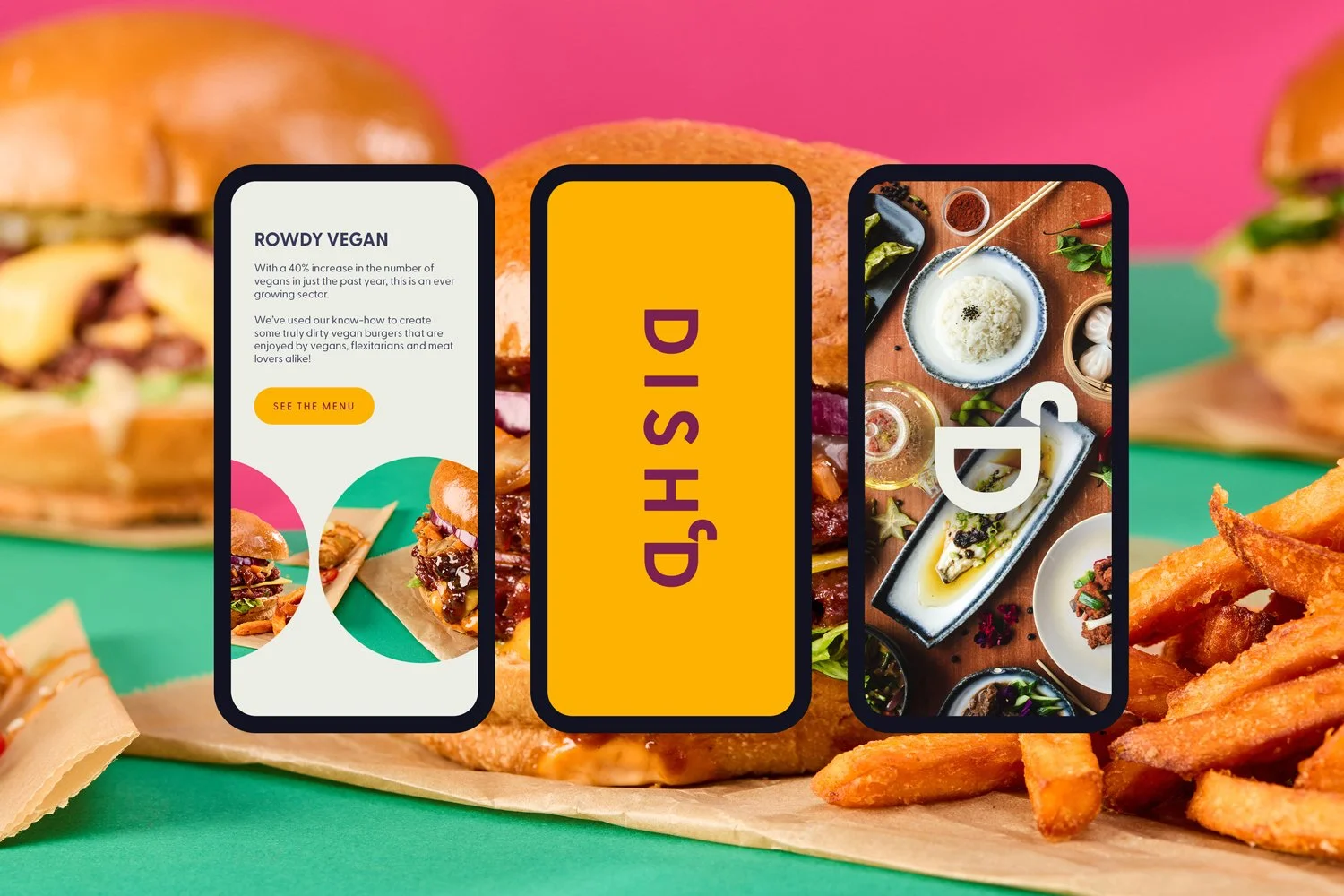
Explore how dark kitchens like Dish’d help restaurants boost revenue, cut costs, and meet modern demand through delivery-first food brands.
The food industry has changed dramatically. From pandemic disruption to today’s app-led dining habits, food delivery has evolved from a secondary option into a core revenue stream. As a result, operators across the UK are asking a critical question: what is a virtual brand, and how can it drive growth?
Virtual brands, often associated with dark or ghost kitchens, are fast becoming one of the most effective ways for operators to unlock new income from existing kitchens. Rather than opening a new restaurant, businesses use their current staff and equipment to operate additional delivery-only food brands on platforms such as Uber Eats, Deliveroo, and Just Eat.
Dish’d has emerged as a leading UK player in this space, offering proven virtual brand concepts including Eugreeka! and Leb + Nom. These brands are simple to operate, fully halal, and designed specifically for delivery performance. With minimal setup costs and comprehensive support, Dish’d enables kitchens to generate £9,000–£15,000 per week in additional revenue, without the expense of bricks-and-mortar expansion.
This guide explains what virtual brands are, why they’re reshaping the food industry, how Dish’d’s model works, and how real operators are already succeeding with the delivery-first franchise approach.
WHAT IS A VIRTUAL BRAND?
Virtual brand vs ghost kitchen vs dark kitchen
The terminology can be confusing, so here’s a clear breakdown:
• Virtual brand – a delivery-only restaurant concept. Customers order online via platforms like Uber Eats or Deliveroo. The brand exists digitally, while food is prepared in an existing kitchen.
• Ghost kitchen – the physical kitchen space used solely for delivery production, with no dine-in service.
• Dark kitchen – the commonly used UK term for a ghost kitchen.
In simple terms, the virtual brand is what customers see online, while the dark or ghost kitchen is where the food is cooked.
The technology behind virtual brands
Successful virtual brands rely on three key pillars:
• Delivery platforms such as Uber Eats, Deliveroo, and Just Eat
• Operational efficiency, with streamlined menus and consistent preparation
• Packaging and logistics that preserve food quality in transit
For this reason, virtual brand menus focus on bold flavours, fast cooking methods, and dishes that travel well.
Who can run a virtual brand?
Virtual brands can operate from:
• Existing restaurants and takeaways
• Purpose-built dark kitchens
• Hotels or hospitality venues with underused kitchen capacity
How Dish’d removes complexity
While many operators worry that launching a virtual food brand will be complicated, Dish’d simplifies the process by offering:
• Speed-focused menus requiring only a fryer and griddle
• Guaranteed halal compliance, opening access to broader audiences
• Marketing and food photography included, reducing upfront spend
• Hands-on onboarding and training, enabling launch in days rather than months
WHY VIRTUAL BRANDS ARE RESHAPING THE FOOD INDUSTRY
The UK’s delivery-first dining culture
Food delivery is no longer an add-on. The UK online food delivery market is forecast to exceed £13 billion by 2025, driven by consumers ordering multiple times per week. This sustained growth has accelerated adoption of virtual brands across restaurants, takeaways, and dark kitchens.
Lower overheads, higher efficiency
One of the biggest advantages of dark kitchens is cost reduction. With no dining space, no front-of-house staff, and no refurbishment costs, operators can launch new concepts using their existing kitchen with minimal investment.
Rising demand for variety and consistency
UK consumers increasingly seek diverse cuisines, from Greek gyros to Middle Eastern street food. Virtual brands meet this demand by offering focused, specialist menus that deliver consistency at scale, a key factor in repeat delivery orders and strong app ratings.
Gen Z and app-first behaviour
Younger consumers prioritise convenience, digital ordering, and fast fulfilment. Many now discover food through searches like “dark kitchen near me” rather than walking the high street. Virtual brands allow operators to reach this audience without increasing fixed costs.
Ultimately, the benefits of virtual brands come down to reach, efficiency, and resilience, making them an attractive solution in a delivery-led economy.
THE DISH’D MODEL: VIRTUAL BRANDS BUILT FOR PROFIT
Simple menus that perform
Complex menus slow kitchens down. Dish’d focuses on streamlined offerings such as souvlaki wraps, fried chicken, and loaded fries, all designed for speed, consistency, and delivery quality.
Seamless delivery integration
Dish’d handles setup across Deliveroo, Uber Eats, and Just Eat, giving partners instant access to large customer bases without the usual platform headaches. Operators can add a virtual brand alongside their existing menu with minimal disruption.
Branding and marketing included
Marketing is often one of the biggest dark kitchen costs. Dish’d removes this barrier by providing:
• Professional delivery-optimised food photography
• Premium branded packaging
• Ongoing app-based marketing support
Support from launch to scale
Dish’d offers hands-on onboarding, kitchen training, and long-term operational support. This end-to-end approach is why many operators see Dish’d as a more sustainable alternative to generic dark kitchen operators.
KEY BENEFITS FOR OPERATORS
Turn spare capacity into profit
Most kitchens experience downtime. Virtual brands allow operators to maximise underused staff, equipment, and prep time by converting idle capacity into delivery sales.
Unlock new revenue streams
Dish’d partners frequently generate £9,000–£15,000 per week in additional delivery revenue, without expanding their premises or workforce.
Halal by design
All Dish’d brands are fully halal, attracting a wider customer base and meeting growing demand for halal delivery options.
Low risk, high margin
Because Dish’d operates from existing kitchens, startup risk is low. Food and packaging costs typically sit around 25% of net sales, enabling strong margins and fast returns.
CASE STUDY: REAL RESULTS FROM A REAL KITCHEN
Umar Kanagaratnam, a Dixy Fried Chicken franchisee in Leyton, London, added Dish’d’s virtual brands to his site and saw immediate results.
“Last week we broke the record, just over £9,000 in additional sales. You can’t go wrong.”
His kitchen now serves walk-in Dixy customers while simultaneously producing delivery orders for Eugreeka! and Leb + Nom, creating two income streams from one location.
With minimal training and simple menus, dishes are prepared and packed in under three minutes. In a highly competitive area with 15 chicken shops within a mile, Eugreeka! stood out as the only halal Greek option, driving new demand.
THE FUTURE OF DARK KITCHENS AND VIRTUAL BRANDS
Hybrid models combining dine-in and delivery-only brands are becoming the norm. Virtual brands allow operators to test new cuisines, adapt quickly to market changes, and scale without committing to new locations.
They also support efficiency and sustainability goals, reducing waste, labour costs, and energy usage compared to traditional expansion.
Dark kitchens are no longer a temporary solution; they are a long-term strategy for growth in a delivery-first world.
READY TO GO VIRTUAL?
Most operators can launch from their existing kitchen if they have:
• A commercial setup with suitable extraction and power
• Halal compliance
• An FSA hygiene rating of 3 or above
With minimal equipment and a streamlined onboarding process, Dish’d can have kitchens live on major delivery platforms within days.
CONCLUSION
The way people eat has changed, and the operators who adapt are the ones thriving. Virtual brands enable kitchens to unlock new revenue, reduce overheads, and reach modern, delivery-focused consumers without the cost of opening new sites.
With proven menus, built-in marketing, and full operational support, Dish’d turns virtual brands into a practical, profitable growth strategy.
Dark kitchens and ghost kitchens aren’t a passing trend. They are a powerful tool for restaurants looking to stay competitive, resilient, and profitable in the future of food delivery.
Ready to explore the opportunity? Become a Dish’d Franchisee and start turning spare capacity into serious revenue. Become a franchise