

Understanding the Trajectory of House Prices in the UK
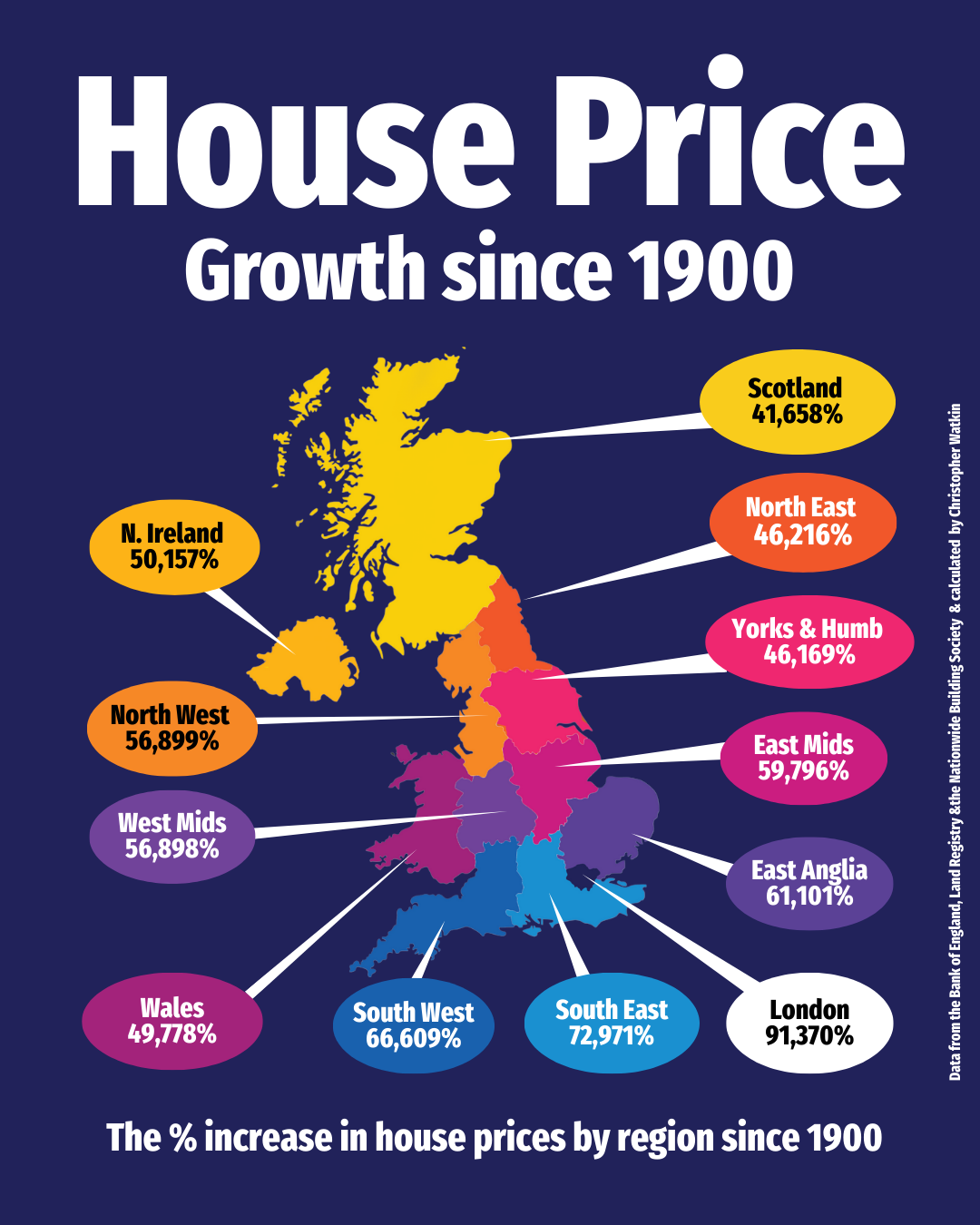
At first glance, the numbers in the house price chart since 1900 look almost absurd, with many parts of the UK seeing increases of forty, fifty, sixty, or even ninety thousand per cent. London is at the extreme end of this scale, but every single region tells the same underlying story of significant growth over the years.
However, these headline percentages can be misleading, making the growth seem explosive, dramatic, or even irrational. In reality, what we are observing is not a series of sudden leaps but the slow, steady effect of time contributing to the increase in house prices.
Annualizing Growth for a Clearer Picture
If we annualize the growth since 1900, which is 126 years ago, the picture becomes more grounded. Across most regions, long-run house price growth works out to around four and a half to five per cent per year, compounded. While London shows a higher rate, and some regions are lower, the order of magnitude is remarkably consistent.
This consistent growth rate matters because it explains why housing feels so relentlessly expensive to each new generation. House prices do not typically jump overnight; instead, they grind higher year after year, decade after decade. Although wages also increase, they rarely follow the same smooth upward trajectory as house prices. The result is that buying a house always feels challenging at the time of purchase.
The British Housing Obsession: A Complex Reality
The uncomfortable truth at the heart of the British housing obsession is that we all want house prices to increase once we own a property, yet we feel the pain of high prices when we are trying to buy. Both sentiments can be true simultaneously, reflecting the complex nature of the housing market.
History clearly shows that waiting for a dramatic reset in house prices has rarely paid off. Over the medium to long term, prices have always recovered and moved higher. The individuals who benefit most are not those who timed the market perfectly but those who got on the property ladder when it was right for them and let time work in their favor.
Lessons from Over a Century of Property Market Data
This does not mean that one should buy a house at any cost or at any moment. Factors such as affordability, job security, lifestyle, and personal circumstances all play a significant role. However, for those waiting purely because they believe prices will suddenly become cheap, history is not on their side.
The lesson from more than a century and a quarter of property market data is simple yet powerful: property rewards time in the market, not attempts to outguess it. Understanding this can help individuals make more informed decisions about their housing investments.
For a deeper dive into the historical data on house prices since 1900 and to explore the trends in more detail, visit Here for comprehensive insights and analysis.

